

A dental crown is one of the most common ways to repair a tooth that is cracked, worn down, or too damaged for a filling to hold. Many patients are surprised to learn that getting a crown can involve two different pieces: a temporary crown you wear for a short time and a permanent crown that replaces it. At many dental offices, you leave the first appointment with a temporary crown and come back a few weeks later for the permanent one. If you are getting ready for a crown or wearing a temporary crown right now, understanding temporary versus permanent crowns makes it easier to know what happens at each visit and how to care for your tooth while you wait for the final crown.
Key Takeaways: Temporary Vs. Permanent Dental Crowns
- A temporary crown is a short-term cover, usually made of acrylic or resin, that protects your tooth while the permanent crown is being made.
- Permanent crowns are made from stronger materials like porcelain, zirconia, or gold and are designed to last for many years with good care.
- Most patients wear a temporary crown for about two to three weeks.
- A temporary crown is held with weaker cement, so avoiding sticky and hard foods and flossing carefully helps keep it in place until your permanent crown is ready.
- Same-day crowns allow many patients to skip the temporary crown entirely. Dr. Hekkert has been placing them since 2003 and now offers them at Ortega Boulevard Dental.
What Is A Temporary Crown?
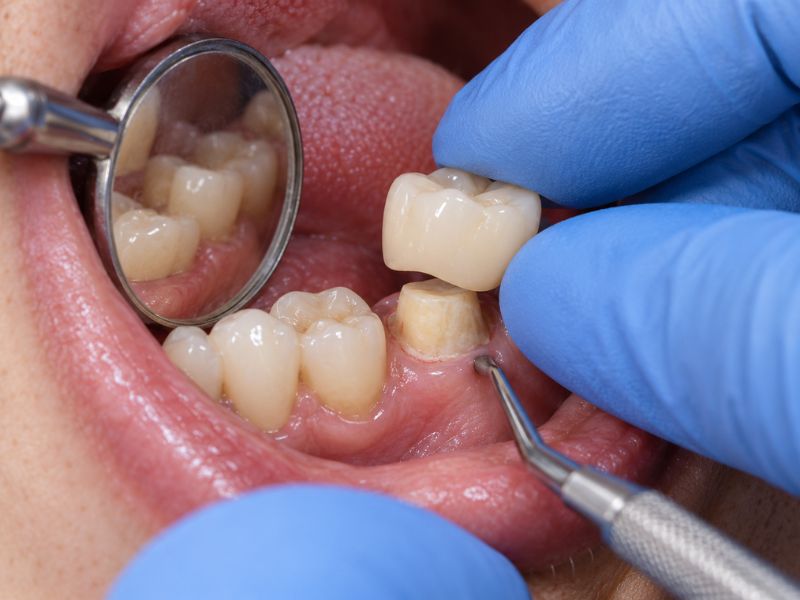
A temporary crown is a protective cap placed over your tooth after it has been prepared for a permanent crown. During that first visit, your dentist numbs the area around the tooth, removes any decay or damage, and reshapes the tooth by taking away a thin outer layer of enamel so the final crown can fit over it. That reshaping leaves the tooth more sensitive and less damage-resistant, so it needs a cover right away.
Temporary crowns provide that cover. Temporary crowns are typically made from acrylic or composite resin. Your dentist shapes yours in the office to roughly match your natural tooth, then attaches it with a temporary cement designed to come off easily later.
Most patients leave their first crown appointment with a temporary one because, at most dental offices, permanent crowns are made by an outside dental lab. That process usually takes a couple of weeks. In the meantime, the temporary crown does several important jobs. It protects the prepared tooth from sensitivity and bacteria, keeps your bite even, and holds the space so neighboring teeth do not shift. It also lets you eat, speak, and smile normally while you wait. For front teeth, a temporary crown can also serve as a trial run for aesthetic appearance, giving you and your dentist a chance to review the shape and look before the final crown is made.
What Is A Permanent Crown?
A permanent crown is a custom-made cap that covers the entire visible portion of a tooth above the gumline. Once it is bonded in place, it restores the tooth’s shape, strength, and function. Dentists recommend crowns for teeth that are cracked, badly worn, weakened by a large filling, or too damaged for a filling to hold.
Traditionally, your dentist takes digital scans or impressions of the prepared tooth and sends them to a dental lab. Technicians use those scans to design and build a crown that matches the exact size and shape of your tooth, and naturally blends with the color of the teeth around it. When the crown is ready, you return for a second visit and your dentist removes the temporary, checks the fit, color, and bite of the permanent crown, and then bonds it in place.
Crowns also play a role after other treatments. Dentists often recommend a crown for a back tooth that has had a root canal, since the tooth can become more brittle afterward. Crowns are also the final piece of a dental implant. After the implant heals into the jawbone, which usually takes a few months, a crown is attached to replace the visible part of the tooth.
Temporary Crowns vs. Permanent Crowns: What Are The Differences?
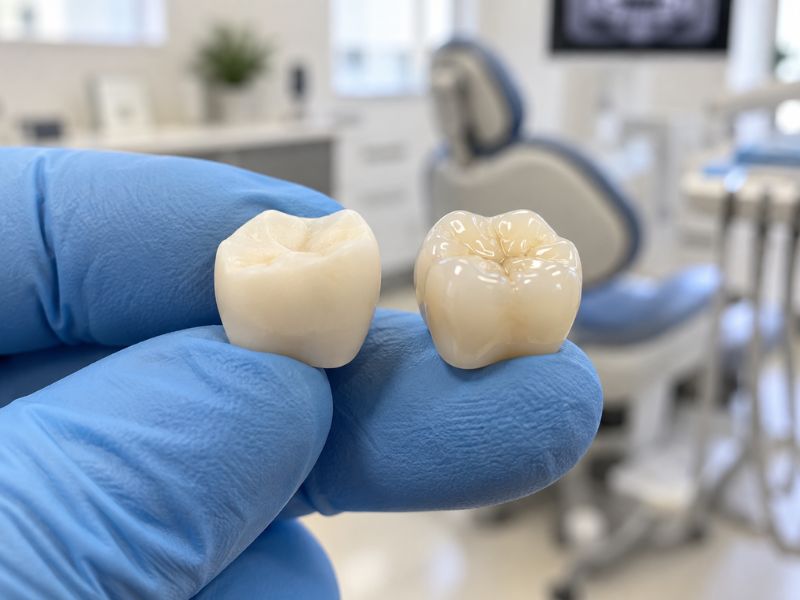
The two crown types serve very different purposes, and that shows up in how they are made, how they look, and how they attach to your tooth.
Materials and Strength
Temporary crowns are typically made from acrylic or resin. These materials are easy to shape quickly, but they are softer than natural teeth and can wear down, chip, or crack under heavy chewing.
Permanent crowns can be made of several different materials, and the best material for dental crowns depends on where the tooth is and how hard you bite. Common options include:
- Porcelain or ceramic: These crowns offer the most natural appearance, which makes them a common choice for crowns on front teeth.
- Zirconia: This very strong ceramic holds up well to strong chewing forces, so it is often used for crowns on molars.
- Porcelain fused to metal: These crowns combine a metal base for strength with a porcelain outer layer for a tooth-colored look.
- Gold and metal alloys: These are extremely durable and gentle on opposing teeth, though their color makes them more noticeable.
Fit and Appearance
A temporary crown is only meant to be a close approximation of your tooth. It is made quickly, so the edges may not seal as tightly, the shape may feel a little bulkier, and the color may not perfectly match your other teeth. Those small gaps at the edges can let bacteria in over time, which is one reason a temporary is meant for short-term use.
A permanent crown is designed to the precise contours of your prepared tooth. It seals snugly at the gumline, matches the shade of neighboring teeth, and fits your bite so that chewing feels natural.
How Crowns Are Bonded To The Tooth
Temporary crowns are held on with a weaker cement on purpose. Your dentist needs to be able to remove the temporary crown easily without damaging the tooth underneath.
Conversely, permanent crowns are attached with a strong dental cement or bonding agent designed to hold for years. Once the cement sets, the crown stays in place through normal eating, brushing, and flossing.
How Long Do You Wear A Temporary Crown For?
Most patients wear a temporary crown for about two to three weeks while a lab makes the permanent one. That timeline can run longer if the lab needs more time or if your dentist makes adjustments to the shape or color of your permanent crown.
A temporary crown only has to last a few weeks, but it needs to hold up through every meal and every brushing until your permanent crown is ready. Knowing how to care for a temporary crown helps it stay in place for as long as you need it:
- Avoid sticky foods like gum, caramel, and taffy, which can pull the crown loose.
- Skip very hard foods like ice, nuts, and hard candy.
- Chew on the opposite side of your mouth when you can.
- Brush gently around the crown.
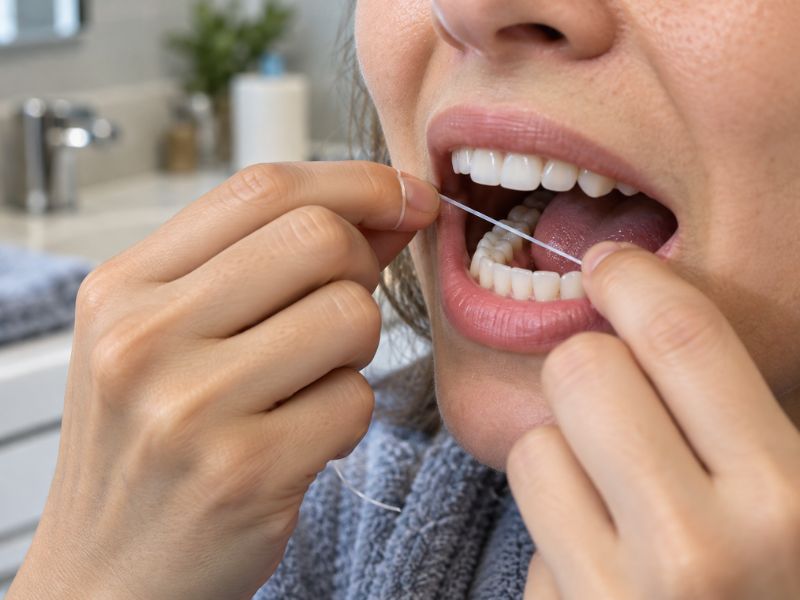
- When you floss, slide the floss out from the side instead of pulling it up, which could lift the crown.
If your temporary crown comes off, keep it in a safe place, avoid chewing on that side, and call your dentist to have it reattached. Leaving the prepared tooth uncovered for a long time can lead to sensitivity and allow nearby teeth to shift.
How Long Does A Permanent Crown Last For?
With good care, a permanent crown commonly lasts 5 to 15 years, and many last longer. How long yours lasts depends on the material of the crown, the location of the tooth, whether you grind or clench your teeth, and your daily habits.
A permanent crown lasts longest when you treat it like your natural teeth and brush twice a day, floss daily, and go to regular dental cleanings and exams. If you grind your teeth at night, a nightguard can protect both your crown and your natural teeth. It also helps to avoid chewing ice or opening packages with your teeth, since both can chip or crack a crown over time.
Signs Your Permanent Crown Needs Replacing
Even permanent crowns wear out eventually. When they do, they usually give a few warning signs, and catching those early can save you a more complicated fix later. Let your dentist know if you notice any of the following:
- The crown feels loose or moves when you chew.
- You see a chip or crack in the crown.
- A dark line appears along the gumline, which can happen with porcelain-fused-to-metal crowns as gums recede.
- You develop new sensitivity or pain near that tooth when biting down.
- The gums around the crown are swollen, receding, or bleed easily.
- Your bite feels different than it used to.
Your dentist also checks your crowns during routine exams, so regular visits help catch issues you might not notice on your own.
What Are Same-Day Dental Crowns?
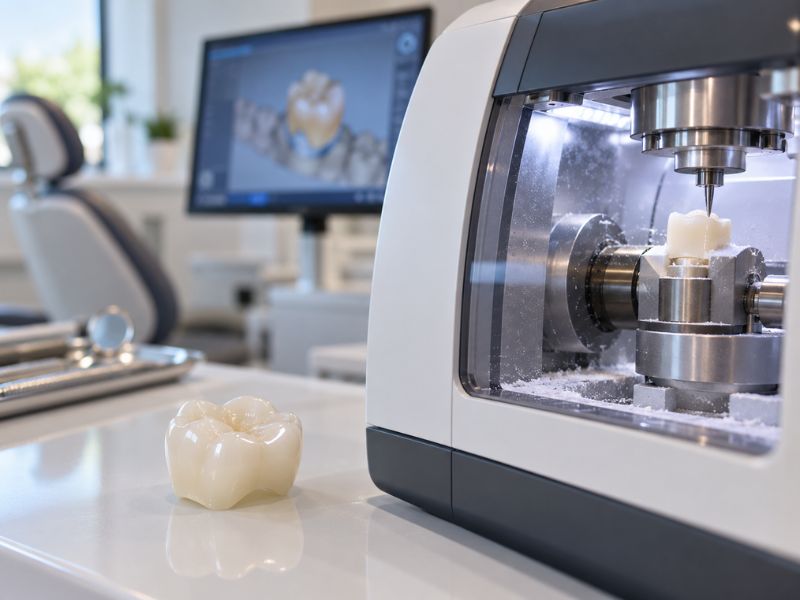
A same-day dental crown is a permanent crown that is designed, made, and placed in a single appointment. Since no outside lab is involved, you skip the temporary crown and the second visit entirely.
At Ortega Boulevard Dental, Dr. Hekkert uses CEREC technology to scan the tooth, design the crown on a computer, and mill it from a solid block of ceramic on site. For most back teeth, the whole appointment takes about two hours.
Same-day crowns are not the right fit for every tooth. Crowns for front teeth often go to a dental lab so the color and translucency can be matched closely to the teeth around them, as those crowns are more visible. In those cases, you wear a temporary crown in between visits.
Your dentist should explain which approach makes sense for your tooth and why.
Get Your Crowns Done Right At Ortega Boulevard Dental
When you compare temporary crowns vs permanent crowns, the difference comes down to purpose. A temporary crown protects your tooth for a few weeks, while a permanent crown is built to restore it for years. For many patients, a same-day crown handles both in a single visit.
Ortega Boulevard Dental has cared for this neighborhood since the 1950s, and our commitment has always been the same: explain your options clearly and let you decide. If you have a tooth that may need a crown, call Ortega Boulevard Dental at (904) 384-4391 to schedule a visit. Dr. Hekkert can evaluate your tooth and help you build a plan that keeps your smile healthy and comfortable.
Temporary Crowns Vs Permanent Crowns: FAQs
A good dentist should recommend a crown only when it is the best way to protect the tooth. Crowns are usually recommended when a tooth is cracked, has a filling too large to hold up on its own, is badly worn, or has had a root canal. In those cases, a filling alone may not be strong enough, and the tooth could break further. At Ortega Boulevard Dental, we only recommend treatment that is necessary. If we recommend a crown, we will explain why, and you are always welcome to ask questions before you decide whether or not to move forward.
A temporary crown is meant to last about two to three weeks. A permanent crown commonly lasts 5 to 15 years or longer, depending on the material and how well it is cared for.
Pain in a crowned tooth years later can have several causes. Decay can develop along the edge of the crown, gums can recede and expose the root, or the crown or the tooth underneath can crack. Grinding your teeth or a change in your bite can also put extra pressure on the tooth. Sometimes the nerve inside the tooth becomes inflamed or infected, which may require a root canal. Any new pain in a crowned tooth is worth having checked so your dentist can find the cause.
At Ortega Boulevard Dental, a same-day crown for most back teeth takes about two hours from start to finish. You leave with your permanent crown in place, skipping the temporary crown phase and second appointment.
Recent Comments